
Periodontal Disease Treatment – Mission Viejo, CA
Resolve Sensitive Gums for Good

When it comes to oral health, most people tend to focus on their teeth. However, the gums are just as important because they not only keep your teeth in place, but they also protect more vulnerable areas, such as the root. So, if you start to notice anything unusual, like bleeding when you floss, don’t wait – call our dental office so we can help get you started on a plan for periodontal disease treatment in Mission Viejo.
Why Choose Palm Dentistry for Periodontal Disease Treatment?
- Nitrous Oxide Sedation Available
- Highly Personalized, Individual Treatments
- Friendly and Welcoming Expert Team
What is Gum Disease?
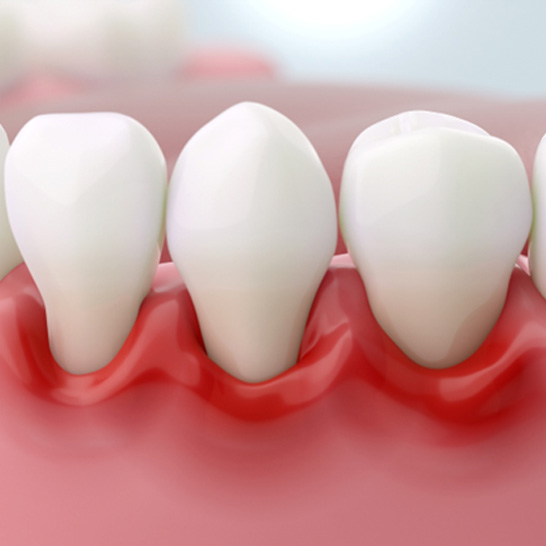
Gum disease is an oral health problem that affects roughly 50% of American adults. In the early stages, the symptoms are relatively minor, like slight sensitivity or irritation. However, if left alone to progress, it can develop into periodontitis. At this point, our goal is to manage the condition to prevent your teeth from falling out or the infection from spreading throughout your body.
Symptoms of Gum Disease

Here are a few warning signs of gum disease:
- Red, tender, or inflamed gums
- Persistent sensitivity
- Bleeding when you brush or floss
- Teeth that appear longer than usual (gum recession)
- A change to your bite
Although symptoms like these are not normal, that doesn’t mean you can’t get the treatment you need. Our team at Palm Dentistry is proud to offer gum disease treatment in Mission Viejo so we can get your oral health back on track.
How Do We Treat Gum Disease?

In the very early stages, the solution may be as simple as focusing on a solid at-home oral hygiene regimen and visiting Dr. Palmer every 3-6 months for a dental exam and cleaning. If the infection has developed considerably, however, then scaling and root planing is needed.
Scaling & Root Planing
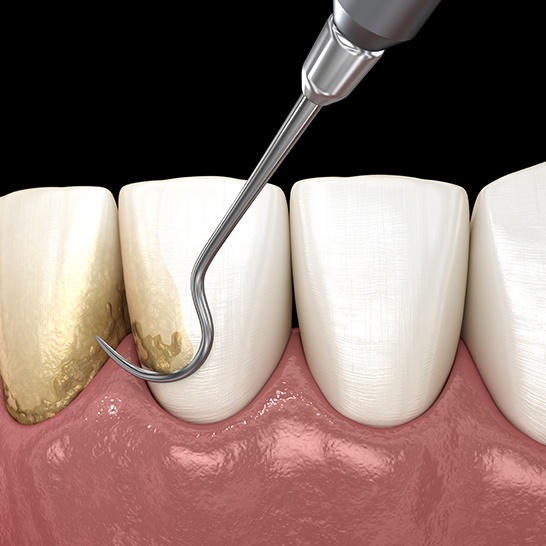
When gum disease has developed, cleaning the visible teeth and gums is not enough to address the underlying cause. In this case, scaling and root planing (which target the enamel underneath the gum tissue as well as the deep gum pockets in your mouth) is the only way to resolve your infection. Scaling works to remove plaque and tartar from underneath the gums, while root planing smooths out the tooth roots to promote reattachment of the gums to the roots. To learn more about this process, click on the button below.
Do I Need Scaling & Root Planing?

When gum infection progresses beyond gingivitis, it can result in red and swollen gums. At this advanced stage, the gums recede from the teeth, exposing the roots and forming pockets where plaque can build up. If you notice more of your teeth’s roots becoming visible, scaling and root planing may be necessary to treat the infection. During your routine checkup, Dr. Palmer might be the first to detect gum disease and inform patients of the need for this treatment.
The Process of Scaling & Root Planing

Scaling & root planing involves a two-step process to treat gum disease. First, we remove the plaque and bacteria buildup on the teeth that cause the infection. This deep and thorough cleaning, known as scaling, goes beneath the gumline to clear out trapped pockets of bacteria. Unlike a routine dental cleaning, scaling targets areas below the gumline. Next, root planing smooths and polishes the exposed roots, making it easier for gums to reattach and harder for plaque to accumulate there in the future.
Aftercare Tips for Scaling & Root Planing

Before scaling and root planing, a local anesthetic will be used to numb your mouth. You should avoid eating for at least two hours afterward to prevent accidentally biting your tongue or cheek while the anesthetic is still effective. To alleviate discomfort over the next few days, rinse with saltwater every few hours. You can continue brushing your teeth as usual, but take care around the treated area.